The Sacred Transition Into Umrah
Entering Ihram is not simply the start of your Umrah journey — it is a profound spiritual transformation. It is the moment a pilgrim intentionally steps away from everyday life and enters a state of purity, humility, and devotion to Allah.
At this stage, clothing becomes simple, the heart becomes focused, and every action becomes intentional worship. Ihram is both physical preparation and spiritual awakening.
Many scholars describe it beautifully: “Ihram is the stripping away of distractions so the heart can fully face Allah.”
When and Where to Enter Ihram (Understanding the Miqāt)
The Miqāt is the sacred boundary set by the Prophet ﷺ where every pilgrim must enter Ihram before crossing it. It is a spiritual checkpoint that reminds you that your journey is now sacred.
There are five main Miqāt points:
- Dhul Hulaifah (Abyar Ali): For pilgrims traveling from Madinah
- Al-Juhfah: For pilgrims coming from North Africa, Egypt, and western regions
- Qarn al-Manazil: For pilgrims from Najd and central Arabia
- Yalamlam: For pilgrims arriving from South Asia, including Australia
- Dhat Irq: For pilgrims coming from Iraq and nearby regions
Important for Australian pilgrims
If you are flying from Australia, your flight will most likely cross the Yalamlam Miqāt over the ocean. This means you must be in Ihram before your plane crosses that point, not after landing in Jeddah.
Pilgrims often prepare 1 to 2 hours before the expected Miqāt crossing, as flight announcements can sometimes be delayed or unclear.
A simple rule to remember: “Ihram begins in the sky before it begins on the ground.”
Preparing Yourself Before Entering Ihram
Preparation for Ihram is both physical cleansing and spiritual readiness. It helps you enter this sacred state with clarity and focus.
Before making intention:
- Perform a full ghusl (ritual bath) or at least wudu
- Trim nails, groom yourself, and remove unwanted hair
- Apply fragrance before Ihram only, never after intention
- Wear clean, comfortable clothing for the journey
- Pray two rak‘ahs if possible as gratitude for reaching this moment
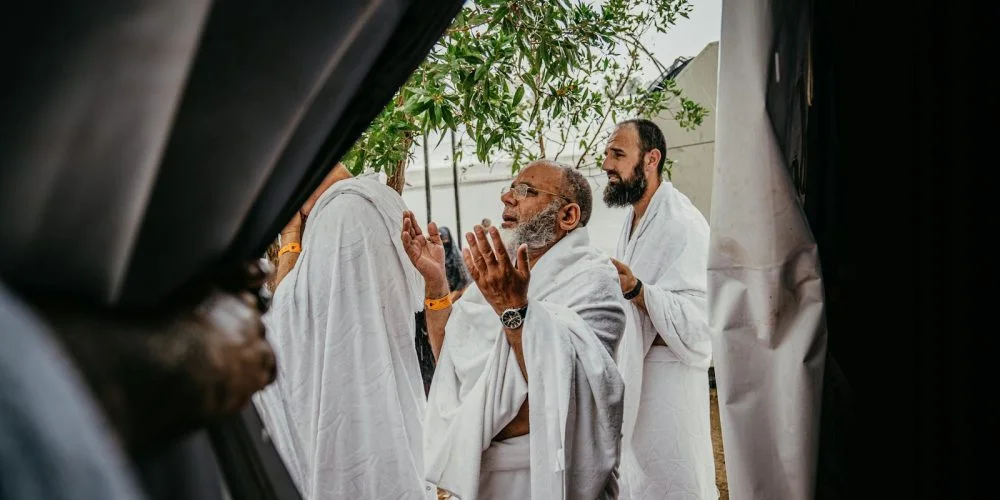
- Make heartfelt dua asking Allah for acceptance, ease, and sincerity
This is a moment to mentally disconnect from worldly concerns and prepare for a journey of worship.
A recommended dua: “O Allah, I intend to perform Umrah. Make it easy for me and accept it from me.”
Wearing the Ihram Garments
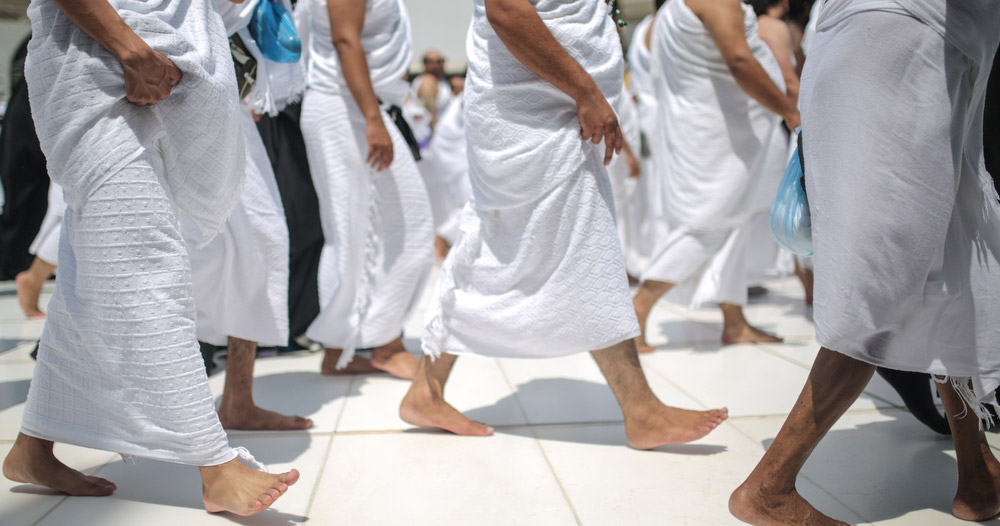
Ihram clothing represents equality, humility, and simplicity before Allah.
For men:
- Two white, unstitched cloths
- One wrapped around the waist (Izar)
- One draped over the upper body (Rida)
- No stitched garments, underwear, or head coverings
For women:
- Any modest, loose-fitting clothing that fully covers the body
- No specific color required
- Face and hands remain uncovered (according to most scholarly opinions)
At this stage, pilgrims often feel a powerful sense of equality — rich and poor, all standing before Allah in the same simple attire.
Making the Intention (Niyyah): The Moment Ihram Begins
The true beginning of Ihram is not the clothing — it is the intention in the heart.
At the Miqāt or before crossing it, you quietly declare your intention:
“Labbayka Umrah” Meaning: Here I am, O Allah, for Umrah.
This is a deeply personal moment. It does not require loud speech or complexity — sincerity is what matters most.
From this moment, you have entered a sacred state where discipline, patience, and awareness become part of your worship.
The Talbiyah: Responding to Allah’s Call
After making intention, you begin reciting the Talbiyah:
“Labbayk Allahumma Labbayk…”
Meaning: Here I am, O Allah, here I am. You have no partner, here I am. Truly all praise, blessings, and sovereignty belong to You.
This recitation is not just words — it is a spiritual response to Allah’s invitation.
Pilgrims often feel overwhelmed emotionally when reciting it for the first time, especially while approaching Makkah. It marks the shift from travel to worship.
Continue reciting Talbiyah frequently until you begin Tawaf.
Common Mistakes Pilgrims Should Avoid
Many pilgrims unintentionally make errors during Ihram. Being aware helps you avoid them:
- Delaying Ihram until after crossing the Miqāt
- Applying perfume or scented products after intention
- Wearing stitched clothing for men
- Shaving or cutting hair after entering Ihram
- Engaging in arguments or heated discussions
- Treating Ihram as a checklist rather than a spiritual state
A powerful reminder: “In Ihram, even your silence is worship if your heart is mindful.”
Spiritual Mindset During Ihram
Ihram is not only about restrictions — it is about elevation of the soul.
During this time:
- Increase dhikr and remembrance of Allah
- Read or listen to the Qur’an regularly
- Make constant dua for yourself, family, and the Ummah
- Practice patience in crowds, delays, and discomfort
- Avoid distractions such as unnecessary phone use or conversations
Another meaningful dua: “O Allah, make me among those who repent sincerely and purify their hearts.”
This phase prepares your heart for the sacred moments in Makkah.
Ihram Checklist Before You Travel
To avoid stress during your journey, ensure you are fully prepared:
- Ihram garments (or modest clothing for women)
- Unscented soap and toiletries
- Comfortable sandals suitable for walking long distances
- A small bag for essentials
- Knowledge of your Miqāt timing based on your flight
- Offline notes or reminders for Talbiyah and dua
- A sincere and prepared intention
Preparation brings peace, and peace allows focus on worship.
Entering Ihram With Heart and Purpose
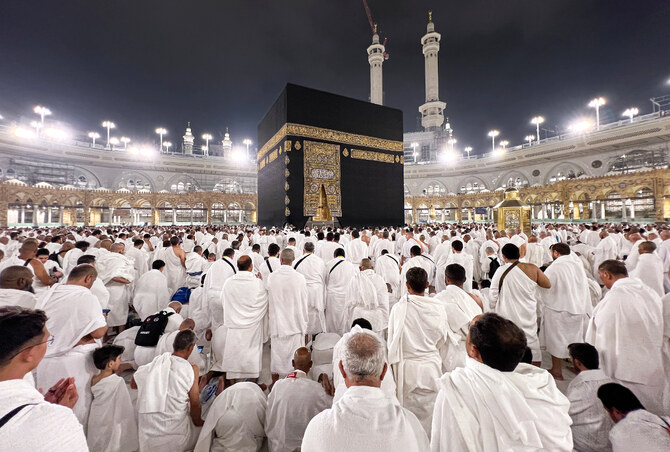
Ihram is the true beginning of your Umrah journey. It is where intention becomes action, and ordinary travel becomes sacred worship.
When you enter Ihram with understanding and sincerity, you are not just wearing garments — you are answering a divine call.
Prepare early, respect the Miqāt, and most importantly, enter Ihram with a heart fully devoted to Allah.
May your journey be accepted, your intentions purified, and your Umrah filled with barakah and peace.