Meaning of Ihram (الإحرام)
The word Ihram (الإحرام) comes from the Arabic root ḥarama (حرم), meaning “to make something sacred” or “to prohibit.” In the context of Hajj and Umrah, it refers to a sacred spiritual state that a pilgrim enters before performing the pilgrimage.
Ihram is not simply a set of garments — it is a complete transformation of intention, behaviour, and mindset. When a person enters Ihram, they become a Muhrim (مُحْرِم), meaning someone who has entered a state of divine restriction for the sake of Allah ﷻ.
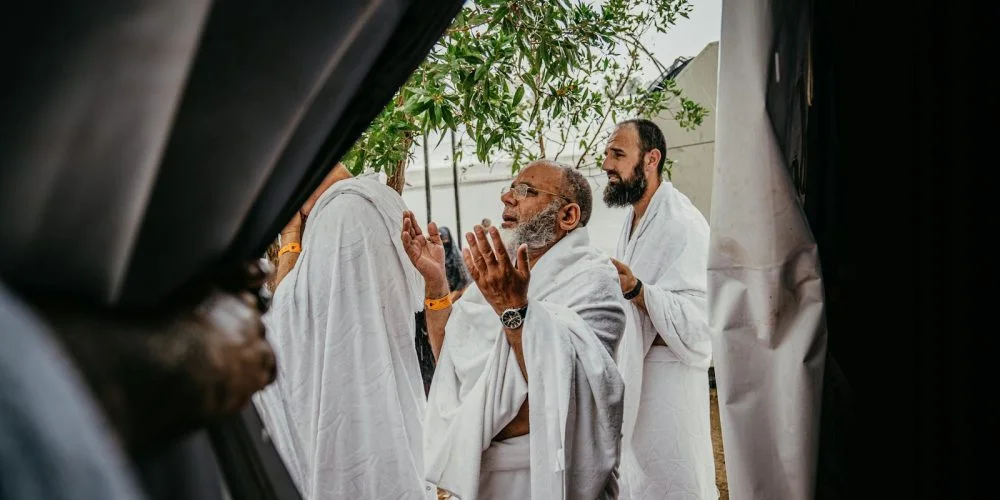
For men, the two white garments worn during this state are also called Ihram. These simple pieces of cloth represent purity, equality, and the removal of worldly identity.
Spiritual significance of Ihram
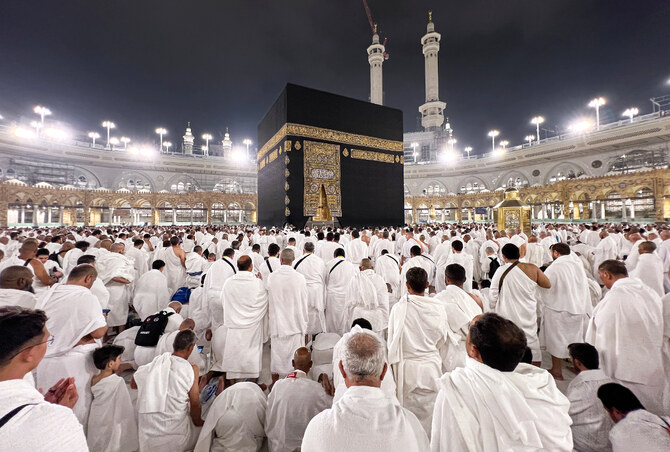
Ihram is one of the most powerful spiritual transitions in a believer’s life. It removes all outward signs of wealth, status, nationality, and personal identity.
Millions of Muslims gather in Makkah dressed in identical white clothing, standing before Allah ﷻ as equals.
There is no distinction between:
- Rich or poor
- Leader or follower
- Black or white
- Strong or weak
Only servants of Allah ﷻ responding to His call.
The Qur’an reminds believers:
“And proclaim to the people the pilgrimage…” (Qur’an 22:27)
Ihram teaches that before Allah, only righteousness and sincerity matter.
When to enter Ihram
Ihram must be entered before crossing the Miqat (المواقيت) — the designated boundary points surrounding Makkah.
These boundaries are not optional. They mark the official beginning of pilgrimage.
If a person crosses the Miqat without entering Ihram, a penalty (fidyah) becomes obligatory, although the Hajj or Umrah remains valid.
Preparing for Ihram
Before entering this sacred state, a pilgrim should prepare physically and spiritually.
Recommended preparations include:
- Trimming nails and removing unwanted hair
- Performing ghusl (غسل) — ritual full-body purification
- Wearing clean, simple clothing
- Avoiding perfumes or scented products
- Making sincere intention for Hajj or Umrah
The Prophet ﷺ encouraged cleanliness and personal grooming before entering Ihram, as purity is part of the believer’s natural disposition (fitrah).
Entering Ihram during travel
Travelling by air
For pilgrims travelling by plane to Saudi Arabia, it is recommended to enter Ihram either at home or at the airport before departure.
Many airports provide prayer rooms or private areas where pilgrims can change into Ihram comfortably.
As the aircraft approaches the Miqat, the heart should already be prepared for intention and remembrance of Allah ﷻ.
Islamic airline guidance
On Islamic airlines, passengers are usually informed before reaching the Miqat.
At that moment, pilgrims should prepare to make their intention (niyyah) and begin reciting the Talbiyah.
⚠️ Important: Avoid scented wipes, perfumes, or fragranced products after entering Ihram.
Madinah before Makkah
Some pilgrimage journeys begin in Madinah al-Munawwarah before heading to Makkah.
In this case, pilgrims remain in normal clothing during their stay in Madinah. Ihram is only entered when leaving for Makkah.
The main Miqat for those travelling from Madinah is:
Masjid Dhul Hulayfah (ذو الحليفة)
This is where pilgrims officially enter Ihram and begin their journey toward Makkah.
Entering Ihram (step-by-step)
1. Physical preparation
Before wearing Ihram, the pilgrim should ensure cleanliness, perform ghusl, and prepare mentally for worship.
2. Ihram clothing for men
Men wear two simple white garments:
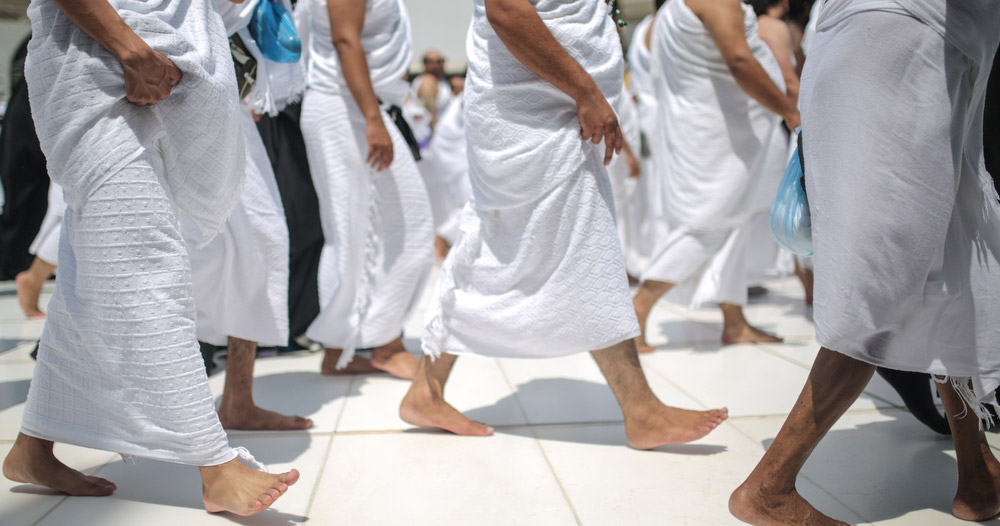
- Izar (إزار): lower garment wrapped around the waist
- Rida (رداء): upper cloth draped over the shoulders
No stitched clothing, underwear, or head coverings are allowed.
This simplicity reflects humility before Allah ﷻ.
3. Ihram for women
Women do not have a fixed uniform in Ihram. They wear modest Islamic clothing in any colour.
- The face remains uncovered (though a loose covering may be used without touching the skin)
- Hands remain uncovered
- Socks are permitted
4. Salah al-Ihram
It is recommended to perform two rak’ahs of prayer before entering Ihram when possible.
This prayer marks a moment of reflection before entering one of the most sacred states of worship.
Niyyah (النية) — the intention of Ihram
The core of Ihram is the niyyah (intention). It is made in the heart, although it is recommended to express it verbally.
Examples include:
For Umrah
لَبَّيْكَ اللَّهُمَّ عُمْرَةً “Here I am, O Allah, for Umrah.”
For Hajj
لَبَّيْكَ اللَّهُمَّ حَجًّا “Here I am, O Allah, for Hajj.”
The sincerity of intention is what defines the spiritual value of Ihram.
Talbiyah (التلبية)
After making intention, the pilgrim begins reciting the Talbiyah:
لَبَّيْكَ اللَّهُمَّ لَبَّيْكَ...
“Here I am, O Allah, here I am…”
The Talbiyah is the emotional and spiritual response to Allah’s invitation.
It should be recited frequently:
- While walking
- While travelling
- After prayers
- During moments of reflection
Life in Ihram
Once in Ihram, certain actions become prohibited:
- No arguing or fighting
- No cutting hair or nails
- No perfume or scented products
- No marital relations
Allah ﷻ says:
“There is to be no intimacy, no disobedience, and no argument during Hajj.” (Qur’an 2:197)
Ihram is a discipline of behaviour, patience, and emotional control.
The hidden wisdom of Ihram
Ihram carries deep spiritual wisdom. It reminds the believer that:
- Life is temporary
- Status and wealth mean nothing before Allah ﷻ
- All humans return to Him equally
- Only deeds and sincerity matter
The white cloth is a reminder of the shroud (kafan) — the garment in which every human will eventually leave this world.
Emotional experience of the pilgrim
Many pilgrims feel a strong emotional shift upon entering Ihram.
There is often:
- A feeling of vulnerability
- Sudden awareness of mistakes and sins
- Deep emotional softness
- A sense of peace and surrender
For many, it becomes the first moment in years where the heart feels fully connected to Allah ﷻ.
Staying in Ihram: a test of character
Ihram is not difficult because of clothing — it is difficult because it tests behaviour under pressure.
A pilgrim must remain patient:
- In crowds
- In heat
- In exhaustion
- In emotional moments
Even small reactions matter. A moment of anger can reduce the spiritual reward of the journey.
Ihram is therefore a training of the soul.
Returning to the Talbiyah
Throughout the journey, the pilgrim repeatedly returns to:
لَبَّيْكَ اللَّهُمَّ لَبَّيْكَ
“Here I am, O Allah, here I am…”
These words are not just spoken — they are lived through every step, struggle, and moment of worship.
Final reflection
Ihram is the beginning of Hajj and Umrah, but its lessons extend far beyond pilgrimage.
It teaches that:
- Simplicity brings clarity
- Patience brings reward
- Equality is a divine truth
- And Allah ﷻ is the ultimate destination
When a pilgrim leaves Ihram, they physically return to normal life — but spiritually, they are never the same again.
If accepted, the journey leaves behind a softer heart, a purified intention, and a deeper awareness of Allah ﷻ.
Closing thought
Ihram is not just the start of a journey to Makkah.
It is the start of a journey back to Allah ﷻ.
A moment where the believer quietly says:
“O Allah, I have left everything for You — accept me.”