Sa’i is one of the most important rituals performed during Hajj and Umrah, representing both physical action and deep spiritual meaning. The word Sa’i (سعى) in Arabic comes from the verb meaning to strive, to walk, and to exert effort. In Islamic practice, it specifically refers to walking back and forth seven times between the hills of Safa and Marwa inside Masjid al-Haram in Makkah.
Unlike a simple walk, Sa’i is an act of worship that reflects patience, trust in Allah, and perseverance during hardship. Every step taken during Sa’i carries symbolic meaning, reminding pilgrims that relief comes after struggle and that sincere reliance on Allah leads to divine support.
The Story Behind Sa’i – The Struggle of Hajar (RA)
Sa’i is rooted in one of the most powerful stories in Islamic history, the story of Hajar (Hagar), the wife of Prophet Ibrahim (Abraham, peace be upon him), and the mother of Prophet Ismail (peace be upon him).
When Ibrahim عليه السلام left Hajar and her infant son in the barren valley of Makkah by divine command, she found herself alone in a dry and uninhabited land with limited provisions. When her water supply ran out and her child began to cry from thirst, she searched desperately for help.
In her effort to find water, she ran between the hills of Safa and Marwa seven times, looking for signs of life or travelers who could assist her. This intense moment of struggle and reliance upon Allah became the foundation of Sa’i.
It is reported that during this moment of trust and desperation, Allah responded to her faith by sending the angel Jibril (Gabriel, peace be upon him), who struck the ground near baby Ismail’s feet, causing the miraculous spring of Zamzam water to gush forth. This water became the source of life in Makkah and marked the beginning of its settlement by the tribe of Jurhum.
The Qur’an beautifully captures the prayer of Prophet Ibrahim عليه السلام during this time:
“Our Lord, I have settled some of my descendants in an uncultivated valley near Your Sacred House… so that they may establish prayer.” (Surah Ibrahim 14:37)
Why Safa and Marwa Are Sacred in Islam
Allah سبحانه وتعالى mentions Safa and Marwa directly in the Qur’an:
“Indeed, Safa and Marwa are among the symbols of Allah…” (Surah Al-Baqarah 2:158)
This verse confirms that Sa’i is not just a historical reenactment but a divinely commanded ritual. It transforms the struggle of Hajar into a timeless act of worship for every pilgrim performing Hajj or Umrah.
Classical scholars explain that Sa’i teaches believers three core values: patience in hardship, complete trust in Allah, and consistent effort even when solutions are not visible.
How Sa’i Is Performed During Hajj and Umrah
Sa’i is performed after completing Tawaf around the Kaaba. It begins at Safa and ends at Marwa, covering seven full laps. The total distance is approximately 3.15 km, with each lap being around 450 meters.
Pilgrims start at Safa, face the Kaaba, and declare their intention while reciting:
“Indeed, Safa and Marwa are among the symbols of Allah.” They then say: “I begin with that which Allah has begun with.”
From Safa, pilgrims walk toward Marwa, completing the first lap. This process is repeated until seven laps are completed, alternating between both hills.
The Walking Route Between Safa and Marwa
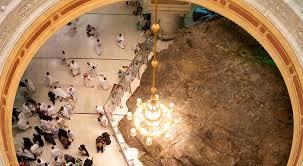
The path between Safa and Marwa is located inside Masjid al-Haram and is fully air-conditioned and organized for millions of pilgrims. Along the route, there are two green-lit markers known as Milayn al-Akhdharayn. Between these markers, men are encouraged to walk briskly or lightly jog, following the tradition of Hajar’s urgency during her search for water. Women and those unable to walk quickly continue at a normal pace.
During Sa’i, pilgrims are encouraged to remain engaged in dhikr, reciting Quran, and making personal dua. Unlike Tawaf, there are no strict fixed supplications, allowing each person to connect with Allah in their own words.
What Happens at Marwa
Each time a pilgrim reaches Marwa, they face the Kaaba and make dua, praise Allah, and reflect on their journey. This marks the completion of one lap. The pilgrim then returns to Safa to begin the next lap.
This continuous movement between the two hills symbolizes life itself—filled with effort, struggle, patience, and eventual relief.
Completing Sa’i and Its Spiritual Meaning
After completing the seventh lap at Marwa, pilgrims conclude Sa’i. For those performing Umrah, this is followed by shaving or trimming the hair, which marks the completion of the pilgrimage ritual and exit from Ihram.
Many pilgrims then perform two rak’ahs of voluntary prayer in gratitude to Allah.
The deeper meaning of Sa’i is not physical movement, but spiritual transformation. It reminds believers that even in moments of uncertainty, effort combined with faith leads to divine help.
Key Rules and Conditions of Sa’i
Sa’i is valid only when performed under certain conditions:
- It must follow Tawaf
- It begins at Safa and ends at Marwa
- Seven complete laps must be completed
- The entire distance between both hills must be covered
- Intention (niyyah) must be made for the sake of Allah
- It is generally performed on foot unless there is a valid excuse
Although wudhu is recommended, it is not a strict requirement, and Sa’i remains valid even without it.
Recommended Practices During Sa’i
To make Sa’i more meaningful, pilgrims often:
- Remain in dhikr and reflection throughout the walk
- Make personal dua for themselves and others
- Recite Quran quietly while walking
- Focus on patience and gratitude
- Prepare important supplications in advance
Between the green markers, men may increase their pace as a symbolic reminder of Hajar’s urgency and determination.
Common Mistakes to Avoid
Many pilgrims unintentionally make mistakes such as:
- Starting from Marwa instead of Safa
- Counting laps incorrectly
- Rushing without understanding the ritual
- Losing focus in unnecessary conversation
- Not preparing duas in advance
Awareness of these points helps ensure a smooth and spiritually focused experience.
The Deeper Wisdom of Sa’i
Sa’i is not only a ritual of movement between two hills—it is a lesson in life itself. It teaches that struggle is part of faith, that effort must continue even when results are unseen, and that relief comes from Allah in ways we do not expect.
The journey of Hajar (RA) is transformed into a timeless act of worship, reminding every pilgrim that sincerity, patience, and trust in Allah never go unanswered.