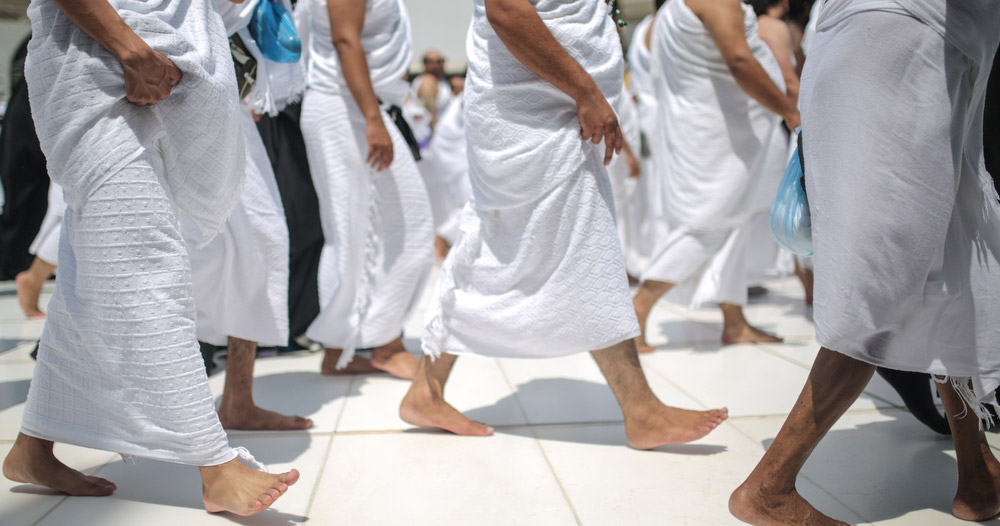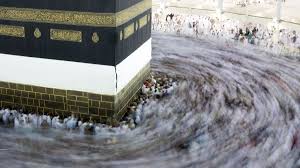
Raml (الرمل) is a Sunnah practice performed during the Tawaf of Hajj and Umrah, where pilgrims walk briskly during the first three circuits around the Kaaba. It is one of the physical expressions of devotion that connects the pilgrim directly to the Sunnah of Prophet Muhammad ﷺ and the early companions.
Unlike normal walking during Tawaf, Raml involves a slightly faster, energetic pace that demonstrates strength, discipline, and readiness in worship while maintaining full respect and humility in the sacred environment of Masjid al-Haram.
Meaning and Purpose of Raml in Islam
The word Raml (الرمل) refers to a brisk or purposeful walking style. In the context of Tawaf, it specifically refers to walking quickly but without running during the first three circuits of Tawaf al-Qudum.
Raml is not simply a physical movement—it is a symbolic act of worship that reflects obedience to Allah and following the example of the Prophet ﷺ. It reminds pilgrims that even physical actions during pilgrimage carry spiritual meaning and reward.
It is performed only in specific situations and is considered a Sunnah, not an obligation, meaning the Tawaf remains valid without it.
How Raml is Performed During Tawaf
Raml is performed during the first three rounds of Tawaf around the Kaaba. After completing the first three circuits with a brisk pace, pilgrims continue the remaining four rounds at a normal walking speed.
In practical terms, it works as follows:
- First three circuits: brisk walking with controlled energy (Raml)
- Remaining four circuits: normal walking pace
While performing Raml, pilgrims maintain focus on dhikr, dua, and remembrance of Allah, ensuring that the physical movement does not distract from the spiritual purpose of Tawaf.
Men perform Raml when applicable, while women are not required to do it and typically maintain a normal walking pace.
The Historical Background of Raml
Raml has its origin in the early days of Islam, during the time when Muslims entered Makkah under challenging circumstances. The Quraysh used to claim that the Muslims were weak due to the hardships faced in Madinah. In response, the Prophet Muhammad ﷺ instructed his companions to walk briskly during the first three rounds of Tawaf to demonstrate strength and confidence.
This action was not for show or pride, but rather to counter false assumptions while maintaining dignity in worship.
As narrated in authentic hadith, the Prophet ﷺ ordered the companions to perform Raml in the first three circuits and walk normally between the Yemeni corner and Black Stone area. This practice was later preserved as a Sunnah.
Another narration highlights that the Prophet ﷺ performed brisk movement in Tawaf and Sa’i to show strength, reinforcing the idea that faith and physical action can come together in worship.
Even after the circumstances changed and Islam became strong, the companions such as Umar ibn al-Khattab (RA) continued the practice, stating that they would not abandon anything done in the time of the Prophet ﷺ.
Key Guidelines for Performing Raml
While performing Raml, pilgrims should focus on both physical discipline and spiritual awareness. The practice is not meant to be competitive or rushed, but controlled and dignified.
Important points include:
- Maintain a brisk but steady pace without running
- Avoid pushing or disturbing other pilgrims
- Keep focus on dhikr and supplication
- Perform only in the first three circuits of Tawaf
- Return to normal walking after completing Raml
The essence of Raml is not speed, but intention, discipline, and following the Sunnah.
Spiritual Wisdom Behind Raml
Raml teaches several important lessons. It reminds pilgrims that worship in Islam is not only spiritual but also physical, and that both body and intention must align in devotion to Allah.
It also reflects the strength of faith during times of challenge. The Prophet ﷺ and his companions performed it as a demonstration of resilience, but over time it became a lasting Sunnah that continues to unify millions of Muslims during Hajj and Umrah.
Raml also emphasizes humility—despite the brisk movement, pilgrims remain in a sacred state of worship, constantly engaged in remembrance of Allah while circling His House.
Common Mistakes to Avoid During Raml
Many pilgrims unintentionally misunderstand Raml or perform it incorrectly. Some common mistakes include:
- Walking briskly in all seven circuits instead of only three
- Running instead of walking, which is not part of Sunnah
- Disturbing or pushing other pilgrims in crowded areas
- Losing focus from dhikr and spiritual intention
- Treating Raml as a physical exercise rather than worship
Understanding the correct method ensures both reward and proper adherence to Sunnah.
Raml in the Context of Modern Tawaf
Today, due to large crowds inside Masjid al-Haram, performing Raml may sometimes be limited by space and safety conditions. In such cases, scholars clarify that pilgrims should prioritize safety and ease of movement while maintaining the intention of following Sunnah.
If Raml cannot be performed fully due to crowd density, the Tawaf remains valid, and the pilgrim is not held accountable for what is beyond their control.
Conclusion
Raml is a beautiful Sunnah that combines physical movement with deep spiritual meaning. It connects pilgrims directly to the actions of the Prophet Muhammad ﷺ and his companions, preserving a practice that symbolizes strength, obedience, and devotion to Allah.
Even though it is a small part of Tawaf, its significance is great, reminding every pilgrim that every step taken in worship carries meaning, history, and reward.