Significance
Halq and Taqsir are not simply grooming actions performed at the end of Umrah or Hajj. They are sacred acts of worship that mark the completion of the pilgrimage rites and the pilgrim’s exit from the state of Ihram. After days of devotion, patience, and obedience, this final step symbolizes humility before Allah, gratitude for completing the journey, and a spiritual transition back to ordinary life.
The importance of Halq and Taqsir is mentioned in the Quran, where Allah refers to pilgrims entering the Sacred Mosque with their heads shaved or hair shortened. Islamic scholars have long explained that shaving the head completely reflects a deeper level of submission and sacrifice, which is why Halq is generally considered more virtuous for men. The Prophet ﷺ also made special supplications for those who shaved their heads, highlighting its excellence.
For women, the Sunnah is different. They do not shave their heads and instead trim a small portion of their hair. This preserves modesty while fulfilling the rite correctly and completely.
For many pilgrims, Halq or Taqsir becomes one of the most emotional moments of the journey. It is the final visible sign that the rites have been completed and the restrictions of Ihram have come to an end. The act often leaves pilgrims with a strong sense of relief, gratitude, and spiritual renewal after fulfilling one of Islam’s greatest acts of worship.
Rulings and Method
Halq refers to shaving the entire head, while Taqsir means trimming the hair. Both acts are valid ways of exiting Ihram after completing the required rites of Umrah or Hajj.
If Halq is chosen, the head should be shaved completely and evenly without leaving patches of hair behind. The purpose of the rite is to demonstrate complete submission and fulfill the ritual in a clear and intentional manner. Partial shaving or leaving random sections untouched goes against the spirit of the act.
Taqsir is the alternative to shaving and requires the hair to be shortened in a noticeable and meaningful way. It should be clear that the hair has been trimmed as part of the ritual and not merely touched or adjusted.
For men, both Halq and Taqsir are valid, although Halq is generally regarded as the preferred option. For women, Halq is not permissible. Their exit from Ihram is achieved through Taqsir only, with a small amount trimmed from the ends of the hair.
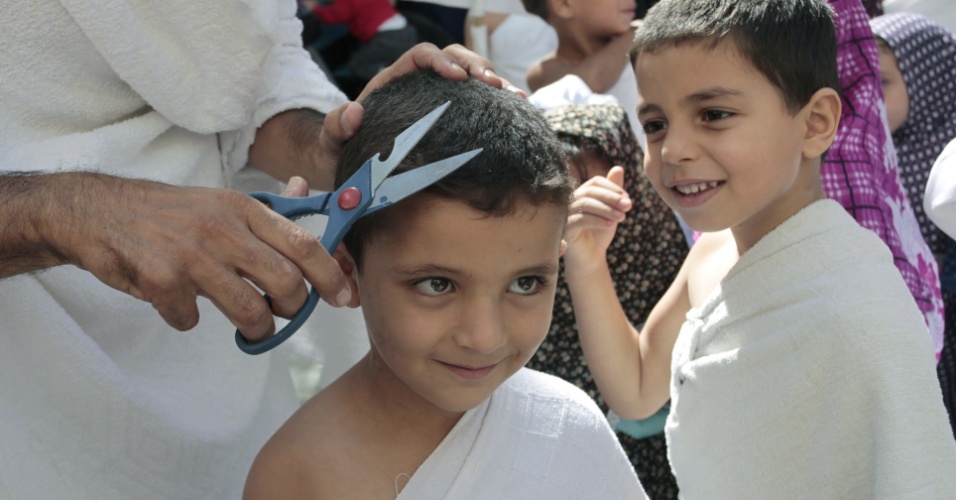
It is also permissible for someone else to perform the shaving or trimming. During busy Hajj and Umrah seasons, many pilgrims rely on licensed barbers, family members, or trusted companions to help complete the rite safely and correctly.
Amount of Hair to Remove
One of the most common questions pilgrims ask is how much hair must be removed for Taqsir. The general principle is that the trimming should be visible and meaningful. A tiny snip that is barely noticeable does not reflect the purpose of the ritual or the completion of Ihram.
Islamic jurists have discussed the minimum amount in different ways, but the practical approach is straightforward: enough hair should be trimmed so that it is clearly evident that the hair has been shortened. Many pilgrims trim from multiple sides of the head to ensure the act is complete and balanced.
Those with very short hair or limited hair growth should still perform the rite to the best of their ability. If a pilgrim is nearly bald, passing a razor or trimmer across the head is generally sufficient to indicate completion of the ritual. The objective is to fulfill the act sincerely and correctly, not to create hardship.
Trimming the Hair for Women
Women do not perform Halq. Islamic teachings prohibit women from shaving their heads as part of the pilgrimage rites, and the prescribed method is Taqsir only.
After completing Umrah or the required rites of Hajj, a woman should trim a small portion from the ends of her hair. This is commonly taken from the end of a braid or from loose hair and should be done modestly and privately.
Even if the hair is already short, a small amount should still be trimmed to complete the rite properly. The act is simple and does not require a barber shop. Many women perform it themselves or with the assistance of a trusted family member or companion.
Pilgrims should be careful not to overlook this step. Some women complete Tawaf and Sa'i and then return to their accommodation without trimming their hair, unaware that they remain in the state of Ihram. For this reason, Taqsir should be performed as soon as the required rites are completed.
When and Where
For Umrah, Halq or Taqsir is performed after completing both Tawaf and Sa'i. The pilgrim should not delay it unnecessarily, as the rite marks the official exit from Ihram.
For Hajj, the timing depends on the type of Hajj being performed and the sequence of the rites. Generally, shaving or trimming takes place after the required acts, such as stoning the Jamarat and, where applicable, the sacrificial offering. Pilgrims should follow the guidance of their scholars or group leaders regarding the correct order.
The rite may be performed in Makkah, Mina, or any suitable location where shaving or trimming facilities are available. During Hajj, many pilgrims prefer Mina because licensed barbers are widely available and the process is organised for large crowds.
A practical approach is to plan ahead. Know where the nearest barber is located, stay connected with your group, and understand the order of your rituals before reaching the final stages of the pilgrimage. Proper planning helps avoid confusion, delays, and unnecessary stress.
Barbers and Practical Advice
Licensed barbers are widely available throughout the pilgrimage areas and are generally the safest option for performing Halq or Taqsir. Because millions of pilgrims complete the rite during peak seasons, choosing a reputable and licensed barber helps ensure both safety and hygiene.
Using unlicensed roadside barbers may seem convenient, but poor hygiene practices can increase the risk of cuts, infections, and the transmission of disease. Disposable blades, clean equipment, and proper sanitation are important considerations, especially in crowded conditions.
Before beginning, make sure the barber clearly understands whether you want Halq or Taqsir. If you prefer, you may also use your own trimmer or razor for additional comfort and hygiene.
Practical tips for pilgrims:
- Choose a licensed barber whenever possible.
- Request a fresh or single-use blade.
- Avoid overcrowded areas when possible.
- Stay with your group if the surroundings are busy.
- Carry your own grooming tools if preferred.
- Allow enough time to complete the rite calmly and correctly.
Quick Practical Checklist
Although Halq and Taqsir may appear to be a simple haircut or shave, they are an important part of the pilgrimage itself. They complete the rites of Umrah or Hajj, mark the end of Ihram, and symbolize humility, obedience, and gratitude to Allah.
Before leaving the pilgrimage area, make sure:
- Tawaf and Sa'i (for Umrah) have been completed.
- The required Hajj rites have been completed in the correct order.
- You have decided whether to perform Halq or Taqsir.
- The hair has been shaved or trimmed properly and visibly.
- Women's trimming follows the correct rulings.
- A barber, razor, or trimmer is available if needed.
- You leave the state of Ihram only after the rite has been completed.
By performing Halq or Taqsir with sincerity, care, and awareness, a pilgrim completes the final stage of worship and concludes the journey in the manner taught by the Prophet ﷺ.