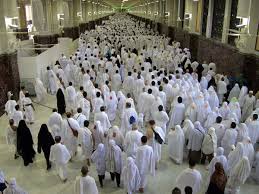
Tawaf is one of the most important acts of worship performed in Masjid al-Haram during Umrah and Hajj. It involves circling the Kaaba seven times in an anti-clockwise direction, starting from a specific point aligned with the Black Stone (Hajr al-Aswad).
However, many pilgrims—especially first-time visitors—become confused about the exact starting position. Due to crowd pressure and limited space near the Kaaba, it is common to accidentally begin Tawaf slightly before or after the correct point.
This raises an important question:
If you start Tawaf from the wrong point, does it affect your Umrah? Do you need to restart it?
The answer is reassuring for most pilgrims: in the majority of cases, your Tawaf remains valid, and no restart is required.
Correct Starting Point for Tawaf
The correct starting point for Tawaf is directly in line with the Black Stone (Hajr al-Aswad). Pilgrims begin Tawaf by facing this point, making intention (niyyah), and then moving in an anti-clockwise direction around the Kaaba.
Inside Masjid al-Haram, this position is marked by a green light indicator on the floor to help pilgrims identify where each circuit begins and ends.
This alignment is ideal, but perfect precision is often difficult due to crowd density.
Why Pilgrims Start From the Wrong Point
Starting Tawaf incorrectly usually happens due to practical conditions rather than negligence. The most common reasons include:
Heavy crowd pressure pushing pilgrims forward or sideways before they can properly align.
Limited visibility of the Black Stone area during peak times.
Following the flow of people without being able to stop and confirm the exact starting point.
Confusion or nervousness, especially for those performing Umrah for the first time.
These factors make slight misalignment very common and understandable.
Does Starting From the Wrong Point Affect Tawaf?
In most cases, starting Tawaf slightly before or after the exact starting line does not invalidate Tawaf.
Islamic rulings focus on the overall validity of the act rather than minor positioning differences caused by crowd conditions.
As long as:
- You intend to perform Tawaf correctly
- You complete seven full circuits
- You move in the correct anti-clockwise direction
Your Tawaf remains valid.
Small deviations in starting position are generally excused because precise alignment is often not possible in crowded conditions.
When It Becomes a Problem
Although minor mistakes are excused, there are situations where correction may be required:
If you begin Tawaf far away from the correct alignment point in a way that clearly does not correspond to the Kaaba’s starting line, it is better to adjust and realign as soon as possible.
If you are unsure where your Tawaf actually began and this confusion affects your counting or circuit completion, you should rely on certainty and ensure you complete a full valid set of seven rounds.
If the mistake leads to incomplete or incorrect circuits, then Tawaf may need to be repeated.
What Matters Most in Tawaf Validity
Islamic scholars emphasize three key conditions for Tawaf:
First is intention. You must clearly intend to perform Tawaf as an act of worship.
Second is completion of seven full circuits around the Kaaba.
Third is correct direction, which must be anti-clockwise.
If these three conditions are met, minor starting position errors do not affect validity.
Real-Life Situations in Masjid al-Haram
In practical situations, pilgrims often experience the following:
A pilgrim begins slightly before the green marker due to crowd movement but continues normally. The Tawaf is valid.
A pilgrim joins the flow of people mid-way and completes seven circuits correctly. The Tawaf is valid.
A pilgrim realizes immediately after starting that they are not perfectly aligned and adjusts position without breaking continuity. The Tawaf remains valid.
Only in cases where the direction is incorrect or circuits are not completed properly would Tawaf need correction or repetition.
Common Mistakes Pilgrims Make
Many pilgrims unnecessarily worry about minor alignment issues and restart Tawaf without need. Others assume that any slight deviation invalidates their worship, which is not correct.
Another common mistake is focusing too much on the starting point while neglecting the importance of completing all seven rounds properly.
Some pilgrims also become overly stressed by crowd pressure, which leads to confusion about where they started.
Practical Tips for Starting Tawaf Correctly
To avoid confusion, it helps to prepare before entering Tawaf:
Identify the green marker that indicates alignment with the Black Stone before stepping into the crowd.
Pause briefly before starting to make a clear intention.
Do not rush into the moving crowd without checking direction.
Focus more on completing your worship calmly rather than achieving perfect physical alignment.
Key Principle to Remember
In Islamic teachings, worship is based on intention and correct completion of required actions. Minor variations caused by unavoidable crowd conditions do not invalidate Tawaf.
Masjid al-Haram is one of the most crowded places on earth during peak times, and slight positioning differences are expected and excused.
Conclusion
Starting Tawaf from the wrong point is a common concern, especially for first-time pilgrims. However, in most cases, it does not affect the validity of Tawaf as long as the intention is correct, seven complete circuits are performed, and the direction is maintained.
Perfect physical alignment is not always possible due to crowd conditions, and Islam provides ease in such situations.
Instead of worrying about small mistakes, pilgrims should focus on completing their Tawaf calmly, with awareness and devotion, trusting that their worship is accepted when performed correctly in intention and action.