Performing Umrah with young children is a beautiful experience, but it also comes with practical challenges. One of the most common questions parents ask before travelling is:
"Can I take a stroller into Masjid al-Haram?"
With millions of pilgrims visiting Makkah every year, crowd management and safety regulations are constantly evolving. Families often arrive expecting to use a stroller throughout their journey, only to discover that access is restricted in certain areas of the Haram.
Understanding the latest stroller rules before you travel can save time, reduce stress, and help you plan a smoother Umrah experience for both parents and children.
Understanding Stroller Rules in Masjid al-Haram
The answer is both yes and no.
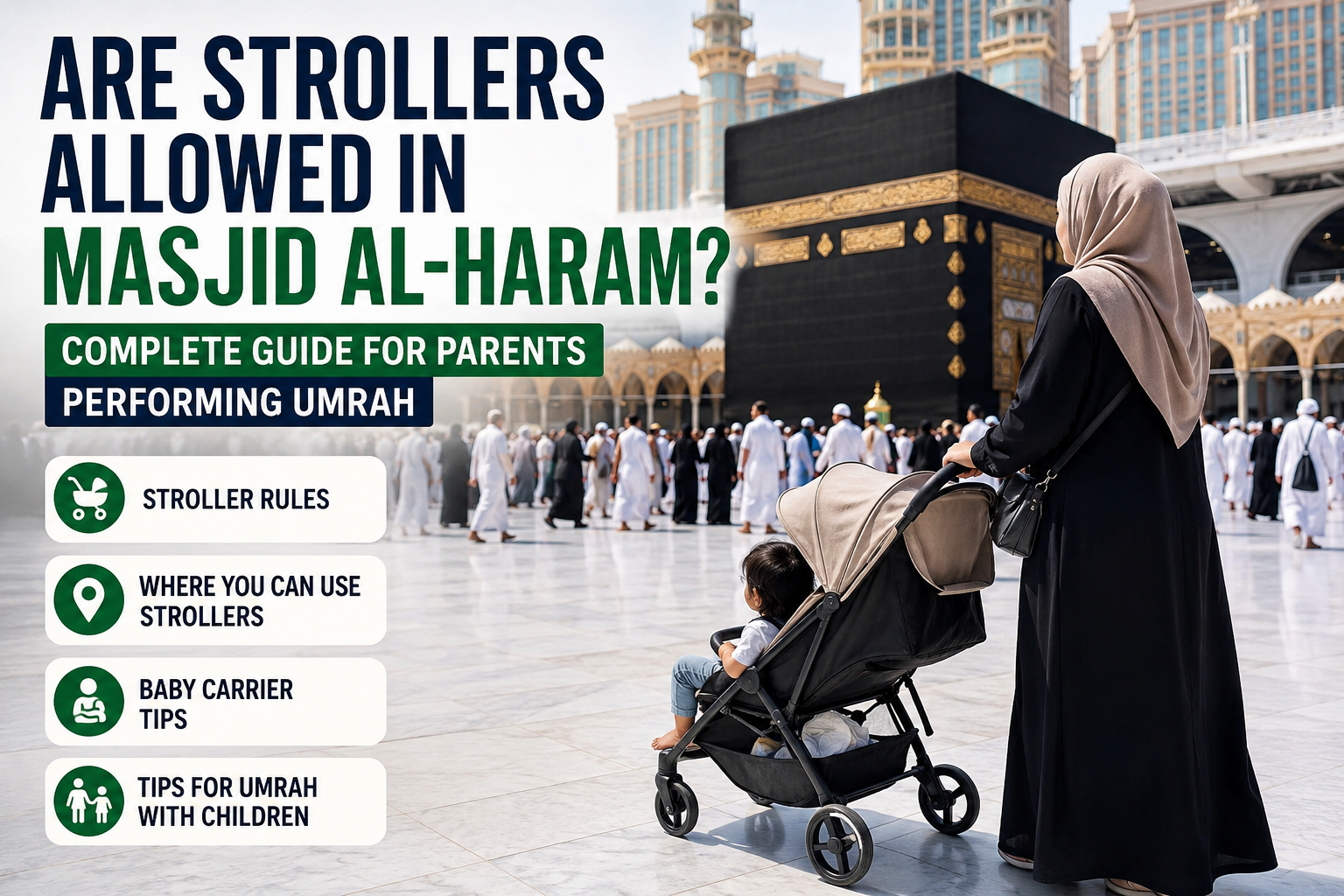
Strollers are generally permitted in certain areas of Masjid al-Haram, but they are restricted in some of the busiest zones, particularly around the Kaaba.
Saudi authorities introduced these restrictions to improve crowd flow and ensure the safety of pilgrims during Tawaf and other rituals.
The most important thing parents should understand is that stroller access depends on:
- Crowd levels
- Prayer times
- Seasonal pilgrim numbers
- Specific areas within the Haram
- Instructions from on-site security staff
Because conditions can change throughout the day, pilgrims should always follow the guidance of Haram security personnel.
Where Strollers Are Not Allowed
Ground Floor Mataf Area
The ground-floor Mataf is the white marble area immediately surrounding the Kaaba where pilgrims perform Tawaf.
This is typically the most crowded area within the entire mosque.
For safety reasons, children's strollers are generally prohibited on the ground floor Mataf.
The restriction was introduced to prevent congestion and improve crowd movement around the Kaaba, especially during busy periods.
During peak seasons such as Ramadan, school holidays, and Hajj, enforcement is usually stricter.
Highly Congested Tawaf Zones
Even in areas where strollers may normally be permitted, authorities can temporarily restrict access if crowd density becomes too high.
Security personnel may redirect families to upper floors or request that strollers be folded and removed.
Some Indoor Prayer Areas
Inside certain prayer halls, particularly during crowded prayer times, strollers may not be allowed.
Parents may be asked to leave strollers outside or move to less congested sections of the mosque.
Where Strollers Are Allowed
Upper Floors of Tawaf
The upper floors of Masjid al-Haram are generally the most family-friendly option.
These levels are commonly used by:
- Families with children
- Elderly pilgrims
- Wheelchair users
- Pilgrims requiring easier movement
The walk is longer than the ground floor, but Tawaf performed on upper levels is completely valid.
Many families specifically choose these levels because they provide more space and a less stressful experience.
Sa'i Area Between Safa and Marwah
Strollers are often permitted in designated Sa'i areas depending on crowd conditions.
Families should remain aware of pedestrian flow and avoid blocking pathways.
Because policies can change throughout the day, it is always best to follow current directions from staff and signage.
Outer Courtyards
The courtyards surrounding Masjid al-Haram are usually much easier to navigate with children and strollers.
Many parents use these areas for:
- Rest breaks
- Feeding children
- Allowing toddlers to relax
- Avoiding intense crowd pressure
What Is the Best Type of Stroller for Umrah?
Not all strollers are suitable for Makkah.
Pilgrims often walk several kilometres each day between hotels, prayer areas, transport stations, and shopping centres.
A heavy stroller quickly becomes difficult to manage.
Recommended Features
Lightweight Design
Choose a stroller that is easy to lift and carry.
Compact Folding System
Security staff may ask you to fold the stroller in certain areas.
Travel-Friendly Size
Smaller strollers are easier to manoeuvre through crowds and lifts.
Sun Canopy
The Saudi sun can be intense, particularly outside prayer times.
Storage Basket
Useful for carrying essentials such as wipes, water bottles, snacks, and spare clothing.
Avoid
- Large travel systems
- Double-width strollers
- Heavy-duty prams
- Bulky pushchairs
Compact umbrella strollers are usually the most practical choice for Umrah.
Should You Bring a Baby Carrier?
For many families, the answer is absolutely yes.
A baby carrier often becomes one of the most valuable items during Umrah.
Benefits of a Baby Carrier
- Easier movement through crowds
- No need to search for stroller parking
- Better access to restricted areas
- More comfortable during Tawaf
- Faster movement between gates
Many experienced parents use both a stroller and a baby carrier, switching between them depending on crowd levels and the location within the Haram.
Stroller Parking Around the Haram
Parents should be prepared for situations where strollers cannot enter certain areas.
In these cases, security staff may direct pilgrims to designated stroller parking locations outside the main prayer areas.
When leaving a stroller:
- Never leave valuables inside
- Keep passports and phones with you
- Take a photo of the parking location
- Attach identification details to the stroller
Large crowds can make it surprisingly difficult to remember where a stroller was left.
Best Time to Perform Umrah With Children
Timing can significantly improve the experience.
Recommended Times
After Fajr
Temperatures are lower and crowds are often lighter.
Late Evening
Children are generally more comfortable after sunset.
Outside Peak Prayer Times
Movement becomes easier and less stressful.
Times to Avoid
- Midday heat
- Immediately before obligatory prayers
- Peak Ramadan periods
- Major holiday rushes
Planning around crowd levels often makes a bigger difference than parents expect.
Common Mistakes Parents Make
Bringing an Oversized Stroller
Large strollers become difficult to push through crowded areas and may be refused entry.
Not Carrying a Backup Option
A baby carrier can be essential if stroller access becomes restricted.
Forgetting Child Identification
Every child should have:
- Parent phone number
- Hotel name
- Group information if travelling with a tour
Overestimating Children's Energy Levels
Even active children become exhausted after long walks in Makkah.
Regular breaks are important.
Practical Tips for Families Performing Umrah
- Stay on the outer lanes during Tawaf on upper levels.
- Avoid the area near the Black Stone with small children.
- Carry extra water at all times.
- Dress children in lightweight clothing.
- Plan shorter worship sessions when travelling with toddlers.
- Keep a small emergency kit with wipes, snacks, and basic medicine.
- Choose accommodation close to the Haram whenever possible.
Small adjustments can make the entire pilgrimage more comfortable for both parents and children.
What Parents Should Remember
Travelling to Umrah with children requires preparation, flexibility, and patience. While stroller restrictions inside Masjid al-Haram can initially seem confusing, understanding the designated areas and current rules helps families navigate the experience with confidence.
For most parents, the best approach is to combine a lightweight travel stroller with a comfortable baby carrier. This provides flexibility whether you are performing Tawaf, completing Sa'i, moving between hotel and mosque, or exploring Makkah with your family.
Most importantly, remember that regulations can change depending on crowd levels and seasonal conditions. Always follow on-site instructions from Haram staff and security personnel during your visit.
A little preparation before departure can make your family's Umrah journey significantly easier, safer, and more spiritually focused.