Why Financial Planning Matters Before Umrah
When preparing for Umrah, most pilgrims focus on visas, flights, accommodation, and packing. However, managing money in Saudi Arabia is equally important. Understanding how banking, ATM withdrawals, card payments, and currency exchange work can save you money and prevent unnecessary stress during your pilgrimage.
Saudi Arabia has one of the most modern payment infrastructures in the region. International debit and credit cards are widely accepted, ATMs are readily available in Makkah and Madinah, and digital payment methods continue to grow in popularity. This means pilgrims no longer need to carry large amounts of cash as was common in the past.
What Currency Is Used in Saudi Arabia?
The official currency of Saudi Arabia is the Saudi Riyal (SAR), written as:
- SAR
- SR
- ر.س
Most expenses during Umrah will be paid in Riyals, including:
- Meals and refreshments
- Local transport
- Shopping
- Laundry services
- Gifts and souvenirs
- Small charitable donations
Although card payments are common, having some Riyals available remains useful for smaller purchases and emergencies.
Should You Bring Cash or Rely on Your Bank Card?
One of the most common concerns among first-time pilgrims is whether to bring cash from home or withdraw money after arriving.
The safest approach is to use a combination of both.
Carry enough Riyals to cover your first day or two in Saudi Arabia, then use your debit card to withdraw additional funds when needed. This reduces the risk of carrying excessive cash while ensuring you always have access to money.
Many experienced pilgrims now rely primarily on cards and ATM withdrawals while keeping a modest amount of cash for convenience. Community discussions among Umrah travellers consistently recommend a balanced approach rather than relying entirely on either cash or cards.
Can International Debit and Credit Cards Be Used in Saudi Arabia?
Yes.
Saudi Arabia's banking system supports major international payment networks, allowing pilgrims to use internationally issued cards for purchases and ATM withdrawals throughout the Kingdom. Supported networks include:
- Visa
- Mastercard
- American Express
- Discover
- UnionPay
Saudi Arabia's Mada payment network connects ATMs and payment terminals across the country and works with international card providers, making it easier than ever for pilgrims to access funds.
Before travelling, it is worth checking:
- International transaction fees
- Daily withdrawal limits
- Overseas ATM access
- Travel notifications required by your bank
Finding ATMs in Makkah and Madinah
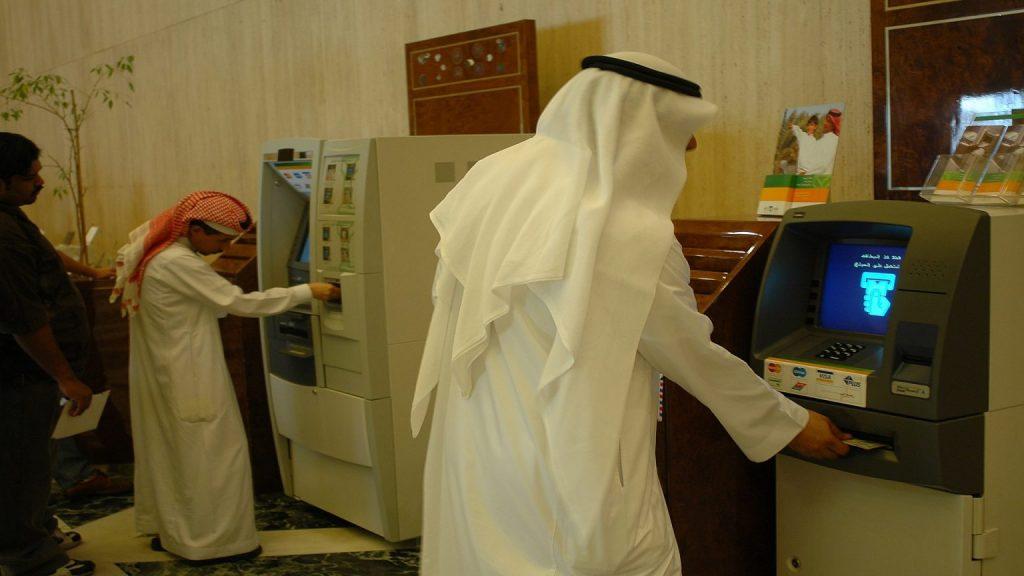
Pilgrims rarely have difficulty finding ATMs.
Machines are commonly located:
- Around Masjid al-Haram
- Around Masjid an-Nabawi
- Inside shopping centres
- In hotel districts
- At airports
- Near transport stations
Most ATMs operate 24 hours a day and support international cards. However, machines near the Haram can become busy during peak pilgrimage seasons, particularly during Ramadan and Hajj.
Which Banks Are Most Common?
You will frequently see ATMs operated by:
- Al Rajhi Bank
- Saudi National Bank (SNB)
- Riyad Bank
- Alinma Bank
- Saudi Awwal Bank (SABB)
These banks have extensive ATM networks throughout major pilgrimage destinations.
How Much Cash Should Pilgrims Carry?
Many first-time visitors assume they need thousands of Riyals in cash.
In reality, most pilgrims only need a moderate amount because ATM access is readily available.
As a general guideline:
- Solo pilgrims: SAR 300–1,000
- Couples: SAR 500–1,500
- Families: SAR 1,000–2,500
The exact amount depends on shopping habits, accommodation, transport requirements, and trip duration.
Understanding ATM and Banking Fees
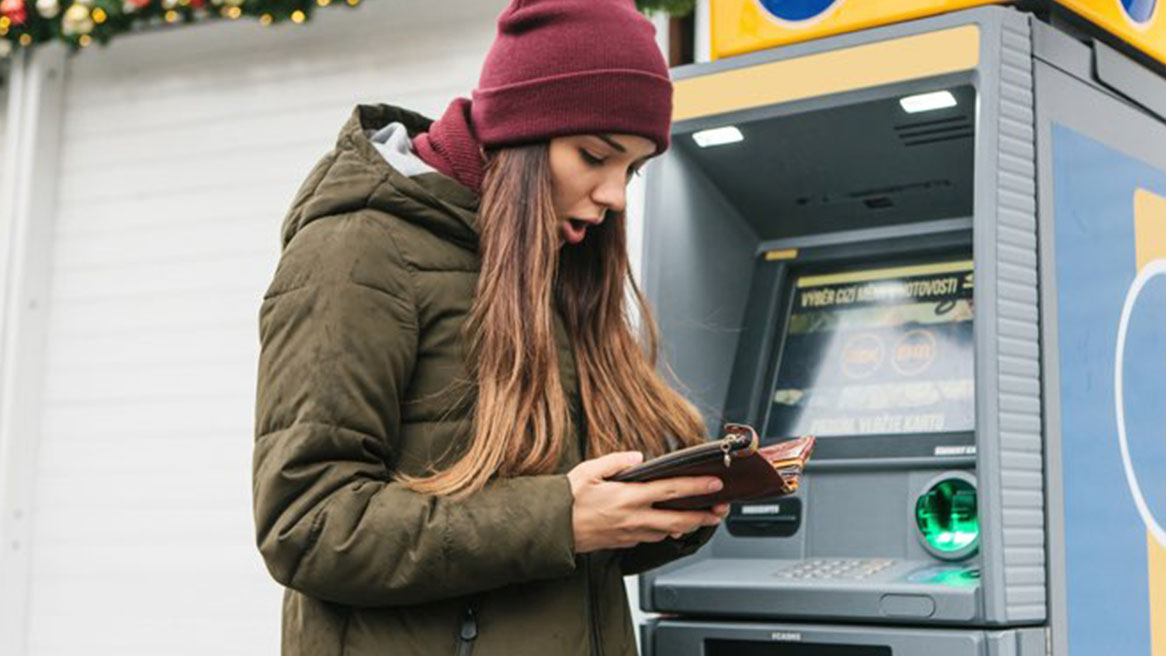
ATM withdrawals are convenient, but fees can add up if you are not careful.
Potential charges include:
Foreign ATM Fees
Charged by your home bank for overseas withdrawals.
Currency Conversion Fees
Applied when converting your home currency into Saudi Riyals.
International Transaction Fees
Usually charged as a percentage of the transaction value.
ATM Operator Charges
Some local banks may charge a small withdrawal fee.
Many travel-friendly cards offer reduced or waived foreign transaction fees, making them particularly useful for Umrah travellers.
Always Pay in Saudi Riyals
When paying by card, you may occasionally be asked whether you want to pay in your home currency.
Always select:
Saudi Riyal (SAR)
Choosing your home currency often triggers Dynamic Currency Conversion (DCC), which typically results in less favourable exchange rates and additional costs. Frequent travellers consistently identify this as one of the easiest ways to avoid unnecessary fees abroad.
Are Apple Pay and Google Pay Accepted?
Yes.
Saudi Arabia has rapidly adopted contactless payments. Many shops, restaurants, pharmacies, supermarkets, and shopping centres accept:
- Apple Pay
- Google Pay
- Contactless Visa
- Contactless Mastercard
Cashless payments are now common throughout Makkah and Madinah, although carrying some cash remains advisable for smaller purchases.
Is It Better to Exchange Money Before Departure?
Exchanging a small amount before leaving home can be helpful.
Having Riyals available upon arrival makes it easier to pay for:
- Food
- SIM cards
- Transport
- Unexpected expenses
However, many pilgrims find that ATM withdrawals often provide more competitive exchange rates than airport currency exchange counters.
Travel Cards and Forex Cards for Umrah
Travel cards have become increasingly popular among pilgrims.
Benefits include:
- Locked exchange rates
- Better budgeting
- Reduced need for cash
- Additional security
- Worldwide ATM access
For longer trips, travel cards can provide an effective alternative to carrying large amounts of currency.
Protecting Your Money During Umrah
Millions of pilgrims visit Makkah and Madinah each year, making basic financial precautions important.
Good habits include:
- Keeping a backup card separate from your wallet
- Using ATMs located inside banks or hotels
- Enabling transaction notifications
- Carrying only the cash required for the day
- Storing emergency funds securely
Many experienced pilgrims also save their bank's international emergency contact number before travelling.
If Your Card Is Lost or Stolen
If your card goes missing:
- Freeze it immediately through your banking app.
- Contact your bank.
- Use your backup card.
- Monitor transactions.
- Access emergency funds if necessary.
Preparing a backup payment method before departure can prevent significant inconvenience during your pilgrimage.
Focus on Your Worship, Not Your Wallet
Modern banking facilities have made managing money during Umrah far easier than in previous decades. International cards are widely accepted, ATMs are plentiful, and contactless payments are increasingly common throughout Saudi Arabia.
The best strategy is simple: carry some cash, keep a reliable debit card, maintain a backup payment method, and always choose Saudi Riyals when making payments. With these precautions in place, you can focus on the true purpose of your journey worship, reflection, and drawing closer to Allah.